
Enigmic: Crime Puzzle Cases
Infinity Games, LdaPuzzle
4.558.00 Reviews
- Version
- 1.9
- Installs
- 100.00K
- Age Rating
- Everyone
Screenshots
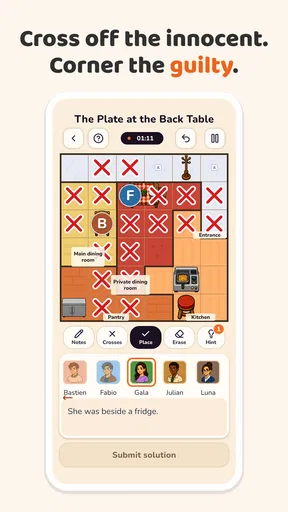
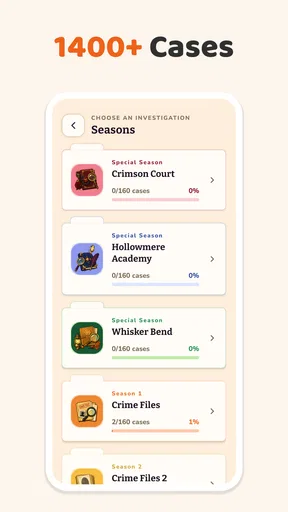
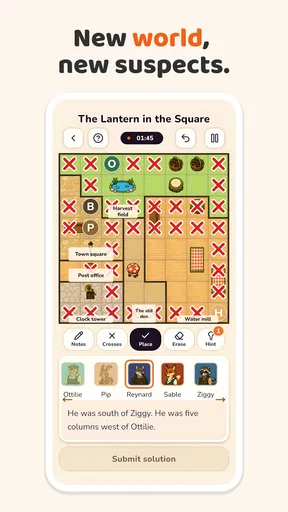
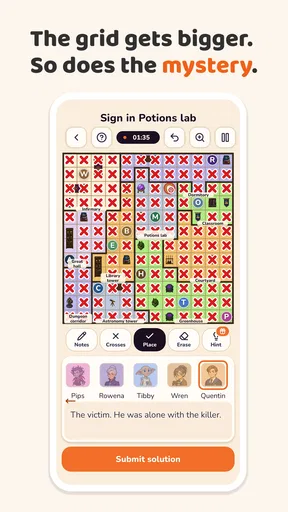
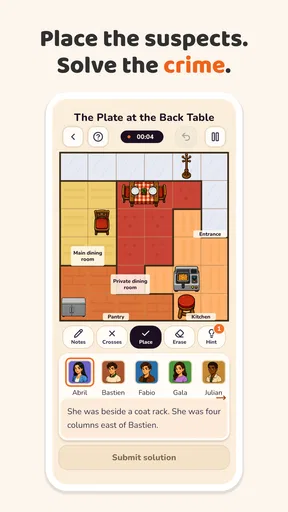
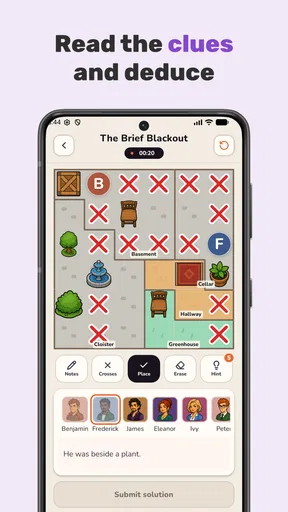
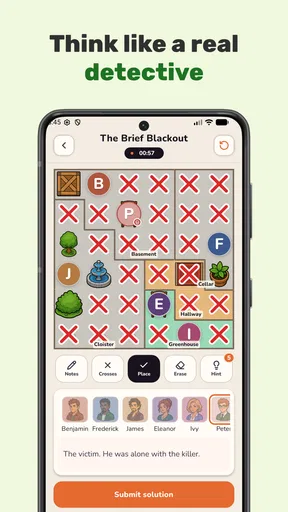
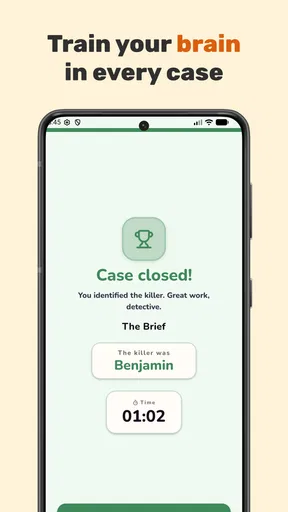
Our Review of Enigmic: Crime Puzzle Cases
 Analysis by Appyee
I approached Enigmic: Crime Puzzle Cases expecting a lightweight mystery game, but its appeal is less about rushing through levels and more about slowing down long enough to connect clues. It is a free puzzle game from Infinity Games, Lda, built around crime cases, logic, and deduction. That basic idea sounds familiar, yet the case-solving format gives each puzzle a stronger sense of purpose than the usual collection of disconnected tile swaps or number grids.
My first impression was that this is best treated as a focused thinking game rather than something to play while barely paying attention. The store summary points directly to solving crimes with clues and deduction, and that framing matters: I found myself reading each piece of information as evidence instead of treating it as decoration. If you enjoy mysteries but do not want an action-heavy game, this is the kind of experience that can fit into a quiet break.
A mystery format that makes each puzzle feel intentional
The central strength is the way a case gives context to the act of solving. In many puzzle games, the only motivation is reaching the next stage. Here, the crime-investigation setting encourages me to remember details, compare possibilities, and question an early assumption. That extra layer makes a correct solution feel more satisfying than simply clearing a board.
I would describe the game as approachable rather than intimidating. Its Everyone content rating makes it suitable for a broad audience, including younger players who like deduction and adults looking for a calmer alternative to competitive games. Still, “suitable for everyone” does not mean every case will feel easy. Logic puzzles can be frustrating when I overlook one small clue, especially if I become attached to a theory too early.
The short description in the store is simply “Enigmic,” which tells a reader very little. After spending time with the game, I think the more useful description is this: it is a clue-driven crime puzzle for players who enjoy forming a theory, testing it, and revising it when the evidence does not fit. That process is the real attraction, not quick reflexes or visual spectacle.
How I approached the cases without getting stuck
My most useful habit was separating confirmed information from guesses. When I read a clue, I mentally placed it into one of two groups: something the case establishes and something I was merely assuming. That distinction prevents a common mistake in deduction games, where one attractive possibility quietly becomes “fact” and makes every later clue seem confusing.
I also found it better to reread the evidence in a fixed order instead of tapping randomly or jumping between ideas. I started with the broadest clue, narrowed the possible people or circumstances, and only then used the smaller details to eliminate options. This workflow is more reliable than trying to solve everything from the most dramatic clue first.
A second useful tactic is to stop when the case stops being enjoyable. If I spend several minutes repeating the same failed theory, continuing immediately rarely helps. Taking a short break gives the information time to settle, and I often return with a clearer view of which assumption caused the problem. That makes the game a surprisingly good fit for short sessions rather than one long sitting.
For families, I would encourage discussing the reasoning rather than giving away the answer. One player can explain why a clue rules out a suspect while another checks whether that conclusion really follows. This turns the game into a small conversation exercise, although players who want a completely solitary experience can simply work through each case at their own pace.
Speed expectations during ordinary play
From a performance perspective, I would not choose this game for demanding graphics or rapid action. Its puzzle-first design suggests a calmer workload, and the important question is whether the interface gets out of the way while I am thinking. In normal use, the experience feels suited to deliberate interaction rather than constant animation or fast reactions.
That distinction is useful when deciding whether to install it. Someone looking for instant visual impact may find the presentation restrained compared with an arcade game. I see that as a reasonable trade-off: a crime puzzle benefits more from readable information and predictable interaction than from effects that compete with the clues.
Because the game is free to install, it is easy to test during a short break without making a commitment. The current version is 1.9, and the game supports devices running Android 7.0 or later. Those details make it accessible to people who are not using the newest phone, although real-world smoothness can still depend on the device and whatever else is running in the background.
I would not promise identical responsiveness on every handset. Older or heavily loaded devices may take longer to open games in general, and a player with limited free storage or many background apps should keep expectations sensible. Nothing about the case-solving format demands that I play at high speed, so a slightly less immediate response is less damaging here than it would be in a racing or competitive action title.
What happens during longer or heavier sessions
The most demanding part of playing is not a dramatic technical moment; it is the mental load created by several clues competing for attention. After a number of cases, I am more likely to make a reading mistake than to lose interest because of speed. That is an important distinction. The game’s challenge comes from interpretation, so a tired player may experience it as harder even when the device itself is handling the session comfortably.
I found that longer sessions work better when I treat each case as a separate task. Trying to keep several investigations in my head at once weakens the main appeal, because the clues begin to blur together. Finishing one case, pausing, and then starting another keeps the reasoning cleaner and reduces the temptation to guess.
A practical everyday scenario would be a commute or a waiting-room visit where I have enough time for one focused puzzle but do not want to begin a large open-world game. The case structure suits that situation better than a game that requires a long uninterrupted campaign. If I am interrupted, I would rather return to a contained deduction problem than remember a complicated sequence of action controls.
On the other hand, this is not necessarily the best choice for background play while watching television. The clues deserve attention, and missing one detail can make the rest of the case feel unfair even when the logic is sound. Players who prefer games that can be played almost entirely by instinct may find the reading and reasoning requirement too demanding.
Another trade-off appears when playing with a group. Discussing a case can be fun, but the person who spots the key connection first may unintentionally solve it for everyone else. I would recommend agreeing that each player explains reasoning without announcing the conclusion immediately. That small rule preserves the deduction element and makes the game more useful as a shared puzzle.
Reliability, interruptions, and recovering my place
For a puzzle game, reliability is mostly about preserving a calm rhythm. I do not want an interruption to make me lose track of which clue led to which conclusion. The less action-oriented structure helps here because I am not being asked to maintain split-second timing. If I need to pause and return later, the main challenge is remembering my reasoning, not rebuilding a complicated control sequence.
My advice is to leave yourself a brief mental note before closing a difficult case: identify the suspect or possibility you are currently testing and the clue that supports it. This is a simple recovery technique, but it is especially useful in deduction games. It prevents the common experience of reopening a puzzle and having to reread everything without knowing where the previous attempt went wrong.
Players should also distinguish between a genuine technical problem and a mistaken deduction. When a case appears impossible, I would first review whether I accidentally treated an inference as confirmed information. That check often explains the problem faster than restarting. Only after reviewing the logic would I consider closing and reopening the game or trying the case again.
The free model is another part of the practical experience. The game includes in-app purchases ranging from $1.99 to $39.99 per item. That does not automatically make the game unsuitable, but it means I would approach the purchase screen carefully and decide in advance whether I want to spend anything. A free download is useful for trying the core experience, while the wide purchase range makes it sensible to keep an eye on accidental spending, especially on a shared device.
I also think the purchase structure can affect how different players judge the game. Someone who wants a completely uninterrupted, no-cost puzzle experience may prefer a paid game with a simpler model. Someone else may appreciate being able to start free and decide later whether the experience deserves extra spending. The right choice depends less on the mystery theme and more on how strongly you want to avoid optional payments.
Device limits and who should install it
The Android requirement of 7.0 or later gives the game a reasonably broad starting point. It is not restricted to only current flagship phones, which is helpful for players using an older but still functional device. Even so, operating-system compatibility is only one part of the decision. A phone with a crowded storage drive, many active apps, or an aging battery may offer a less comfortable experience than a newer device.
I would install it on a modest phone if I wanted a thoughtful puzzle and did not care about high-end graphics. The game’s value lies in its cases and deductions, so the hardware does not need to be chosen for visual power. I would be more cautious on a device shared with children, not because of the Everyone rating, but because in-app purchases can still matter when several people use the same account.
It is also worth considering screen size. Clue-based games benefit from being able to read and compare information without feeling cramped. A small display may be perfectly usable, but it can make careful reading more tiring during a long session. If I were choosing between two devices, I would favor the one with the clearer, more comfortable screen rather than the one with the fastest processor.
Players who need a game that works as pure audio-free background entertainment should skip this one. So should anyone who dislikes reading clues, revisiting assumptions, or accepting that a solution may require patience. The game is a better match for people who enjoy logic grids, detective fiction, and the satisfaction of eliminating possibilities one by one.
How it compares with familiar puzzle alternatives
Compared with a standard match-three game, this offers less instant relaxation and more concentration. A match-three title is easier to play while chatting or waiting for something because the rules are quickly visible. Enigmic asks me to remember context and interpret clues, but in return it gives progress a stronger narrative reason.
Compared with a traditional crossword or sudoku app, the crime-case format provides more atmosphere and a clearer question to answer. Sudoku is excellent when I want pure numerical logic, while a crossword depends heavily on vocabulary and word knowledge. This game sits between those experiences: it uses deduction, but the mystery framing makes the reasoning feel connected to a situation rather than an abstract grid.
Compared with a large story-driven detective adventure, it appears more practical for short sessions. A full adventure may offer richer characters, exploration, and a longer plot, but it also asks for more time and attention. I would choose this game when I want the core act of examining evidence without committing to a lengthy campaign. I would choose the larger adventure when narrative depth and exploration matter more than compact puzzle solving.
The main compromise is that a focused case game can feel repetitive to players who need constant mechanical variety. If your ideal puzzle experience includes physics challenges, wordplay, spatial manipulation, or competitive scoring, the crime-investigation structure may seem narrow. Its strength is also its boundary: it knows what kind of thinking it wants from you.
My performance verdict after weighing the trade-offs
My overall view is positive, with a clear condition: Enigmic: Crime Puzzle Cases works best when you want a quiet, clue-focused challenge rather than a fast or visually demanding game. The free entry point, broad age rating, and older Android support make it easy to try, while the mystery setup gives ordinary deduction a more memorable purpose.
I would recommend it to someone who enjoys forming theories, checking evidence, and playing in compact sessions. It is especially suitable for a commute, a waiting period, or an evening when I want something engaging without the pressure of timers or reflex-based competition. The most important tip is to treat every clue carefully and keep guesses separate from confirmed facts.
I would not recommend it to a player who wants constant action, a deep exploration campaign, or a game that can be enjoyed without reading. The in-app purchase range is another reason to approach it thoughtfully rather than assuming that “free” means the entire experience will remain cost-free. On an older or busy device, I would also keep expectations realistic, although the puzzle format is naturally less sensitive to small speed differences than action games are.
Infinity Games, Lda has chosen a focused concept, and that focus is what makes the game worthwhile. With an average rating of 4.5 from around 8.3 thousand ratings and more than 100 thousand installs, it has already attracted a meaningful audience without needing to be treated as a blockbuster. I see it as a specialized puzzle recommendation: not universal, but a strong fit for anyone who wants to solve fictional cases through patient reasoning.
The game was released on May 15, 2026, and its current version is 1.9. Those details are useful when checking compatibility, but the deciding question is simpler: do you enjoy thinking like an investigator? If the answer is yes, I think this free puzzle is worth trying. If you prefer immediate feedback and minimal reading, a conventional arcade or casual puzzle alternative will probably serve you better.
Verdict
Strengths of Enigmic: Crime Puzzle Cases
- Engaging crime cases encourage careful reading and logical deduction.
- Short investigation chapters make it easy to play in quick sessions.
- Atmospheric visuals and sound support the mystery-focused presentation.
- Clue-based progression gives each solved case a satisfying payoff.
- The game offers a relaxing alternative to action-heavy mobile titles.
Limitations of Enigmic: Crime Puzzle Cases
- Some puzzles may feel too straightforward for experienced mystery fans.
- Progress can depend on finding specific clues in the correct order.
- The darker crime themes may not appeal to younger players.
- Repeated investigation patterns can become predictable over time.
- Certain content or extra cases may require in-app purchases.
Other Releases by Infinity Games, Lda
View All
Idle Dot Shooter!
Arcade4.4

Traffix: Traffic Simulator
Simulation4.6

Package Inc - Management Games
Simulation4.3
Similar Picks in This Category
View All
Block Blast!
HungryStudio4.8

Braindom: Brain Games Test
Lahana Game Studio4.6

AMAZE!
CrazyLabs LTD4.6

Sudoku - Classic Sudoku Puzzle
Oakever Games4.7

Art Puzzle - Puzzle Games
Easybrain4.8

Amaze GO!
Oakever Games4.9
Frequently Asked Questions
What is Enigmic: Crime Puzzle Cases about?
Enigmic: Crime Puzzle Cases is a mystery investigation game built around solving fictional criminal cases. You examine clues, connect evidence, question suspects, and use your reasoning to uncover what happened. Each case is presented as a puzzle, so progress depends on paying attention to details rather than simply tapping through dialogue. It is best suited to players who enjoy detective stories, hidden clues, and logic-based challenges.
How does the gameplay work in Enigmic: Crime Puzzle Cases?
Gameplay generally combines investigation, clue discovery, evidence analysis, and decision-making. You move through case-related scenes, inspect objects, read information, and work out how different details fit together. Some puzzles require careful observation, while others depend on interpreting statements or identifying contradictions. The experience is designed to reward patience and logical thinking, so rushing through conversations can make a case more difficult to solve.
Is Enigmic: Crime Puzzle Cases free to download and play?
The game can typically be downloaded without an upfront purchase, but availability of optional in-app purchases, advertisements, or paid case content may depend on the version and platform. Before installing, it is worth checking the store listing for current pricing details and whether additional episodes or hints require payment. Players should also review the permissions and purchase settings if children may use the device.
Does Enigmic: Crime Puzzle Cases require an internet connection?
An internet connection may be needed for the initial download, account-related features, advertisements, updates, or accessing certain case content. Whether every investigation can be played fully offline can vary between versions, so users should not assume that all features will remain available without connectivity. If you plan to play while traveling, test the game offline after installation and confirm which cases and tools continue to work.
Is Enigmic: Crime Puzzle Cases suitable for all ages?
Although Enigmic: Crime Puzzle Cases uses a puzzle-focused format, its subject matter involves crime, investigations, suspects, and potentially mature themes. The tone and content may not be appropriate for very young children, particularly if cases refer to violence, danger, or disturbing situations. Parents should check the official age rating and store description, then decide whether the game’s mystery themes are suitable for the intended player.
Play our best games!


